
PRC Estimates Value of USO and Monopolies

Every year in its annual report, the Postal Regulatory Commission provides its estimate of the value of the Postal Service’s monopolies over the delivery of some hard-copy mail and access to the mailbox.  At the same time, the PRC estimates the cost to the USPS for its Universal Service Obligation.  Both figures are for the prior full fiscal year.  On…

Read More

“Pilot Test” Continues Adrift

Usually, when the Postal Regulatory Commission allows the Postal Service to conduct a test of a potential new product or service, there’s a finite arc of related events, such as a proposal by the USPS, review by the PRC, and establishment of a test with reporting requirements and specific start and end dates.  Over the test period, results are reported…

Read More

USPS Greenwashes its Network Changes – Analysis

In an unabashed example of creative reinterpretation, the Postal Service has reframed the ongoing changes to its processing and transportation networks as initiatives designed to reduce its carbon footprint. In a lengthy Industry Alert issued February 6, the agency asserted that the environmental benefits flow from elements of Postmaster General Louis DeJoy’s 10-Year Plan, repeating some of his stock criticisms…

Read More

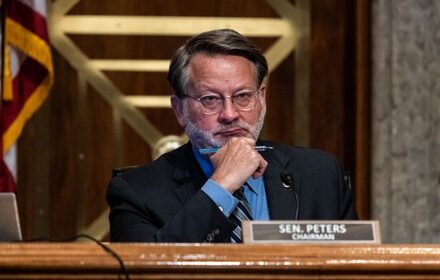
Key Senator Asks for Details of Network Changes

As regular readers know, the Postal Service’s ongoing measures to implement elements of Postmaster General Louis DeJoy’s 10-Year Plan seldom are revealed directly to ratepayers or commercial mail producers. Rather, because of contractual obligations, information about facility changes and other matters having a potential impact on unionized employees is presented to the labor groups.  In turn, that information is often…

Read More

USPS Begins Insourcing Transportation Work

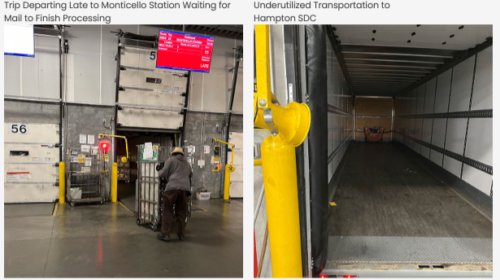
Looking to reduce the Postal Service’s use of air transportation, and make feasible slower service for First-Class Mail, Postmaster General Louis DeJoy moved significant quantities of mail onto ground transportation routes for all but the greatest distances. Now, looking for ways to reduce the reliance on contractors for that service, the PMG is beginning to insource USPS transportation.  As reported…

Read More

Mixed Messages from the USPS About Cost Reductions

Anyone familiar with the Postmaster General’s 10-Year Plan knows that part of the strategy to balance the agency’s books includes not only price increases but cost reductions from improved efficiency in USPS operations.  Many readers, particularly noting the changes now underway in the Postal Service’s processing, transportation, and delivery networks, conclude that some of the forecasted efficiency and savings will…

Read More

USPS Buying More Electric Vehicles

Continuing steps to move to a more battery-powered delivery fleet, the Postal Service announced on February 28 that, “after a competitive search,” it had awarded a contract to Ford Motor Company for 9,250 Ford E-Transit Battery Electric Vehicles. However, the agency conditioned starting delivery of the trucks, planned for December, on the “successful completion of the Supplemental Environmental Impact Statement…

Read More

USPS Praises its Election Mail Performance

In its 2022 Post-Election Analysis, a document released January 9, the Postal Service reported the service it claimed to have provided “ballots [sent] from voters to local boards of elections” between September 6 and December 6, 2022.” Of the 54.4 million ballots it identified over the period, it claimed to have delivered 98.96% within three days, 99.82% within five days,…

Read More

Exclusions Continue to Reduce Volume “In Measurement”

Though the Postal Service has issued its PQ IV service performance data, it remains questionable whether the reported figures truly represent the service experience of the associated class or category of mail.  Significant quantities of mail remain not “in measurement” for any of several reasons, but the leading causes are “long haul,” “no piece scan,” and “no start-the clock.” The…

Read More